Rs-brownie
Rs-brownie
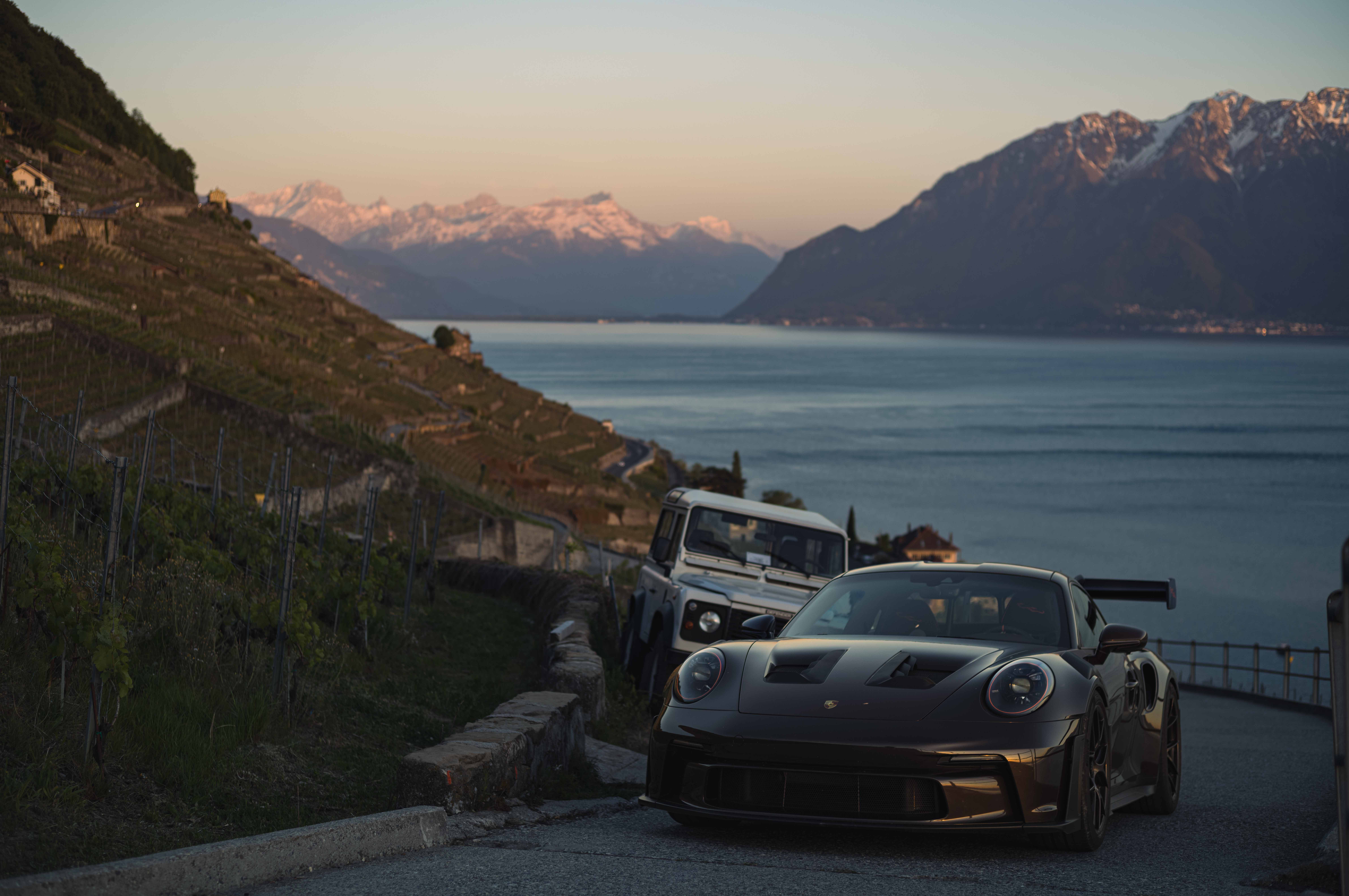
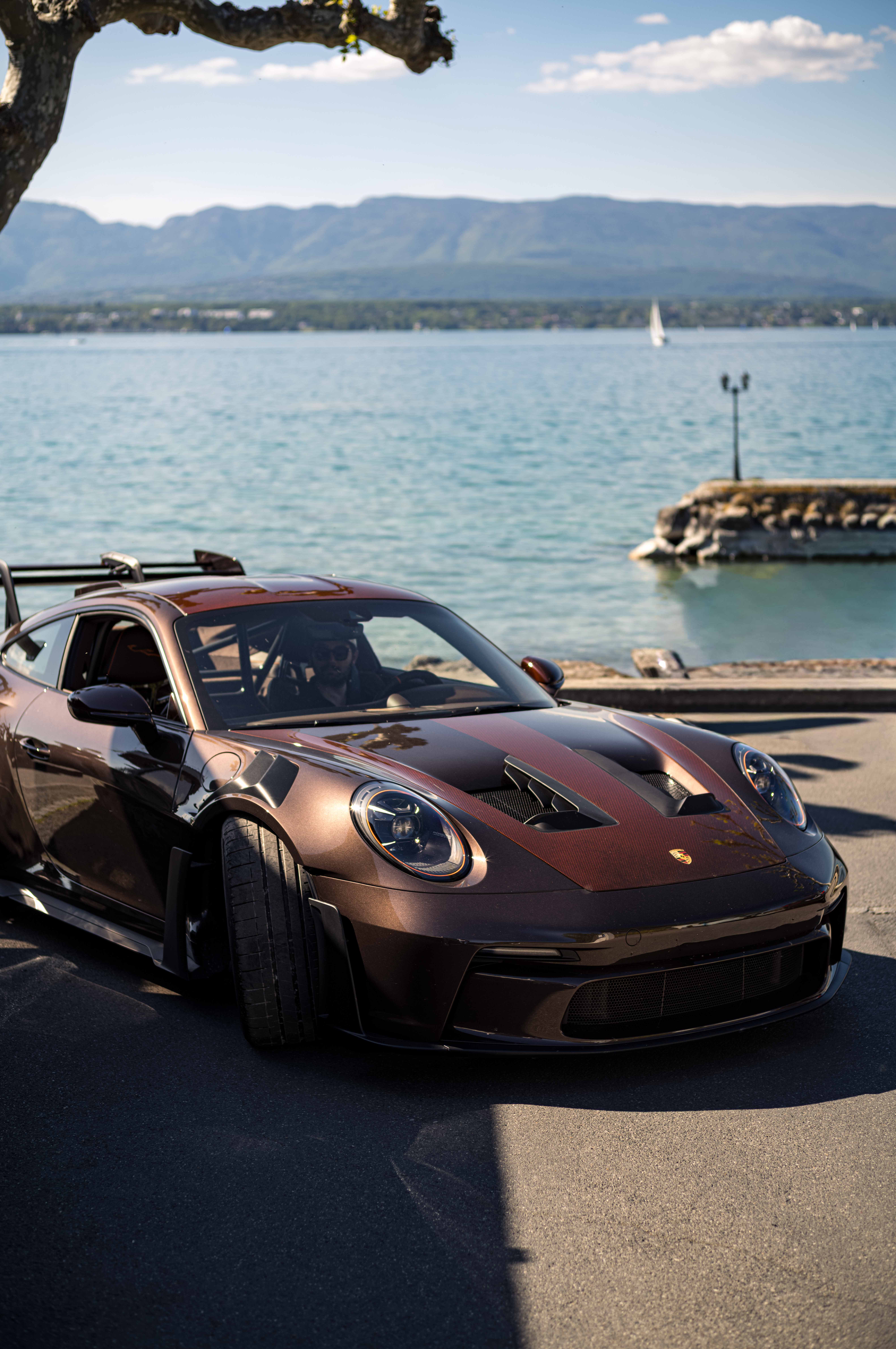
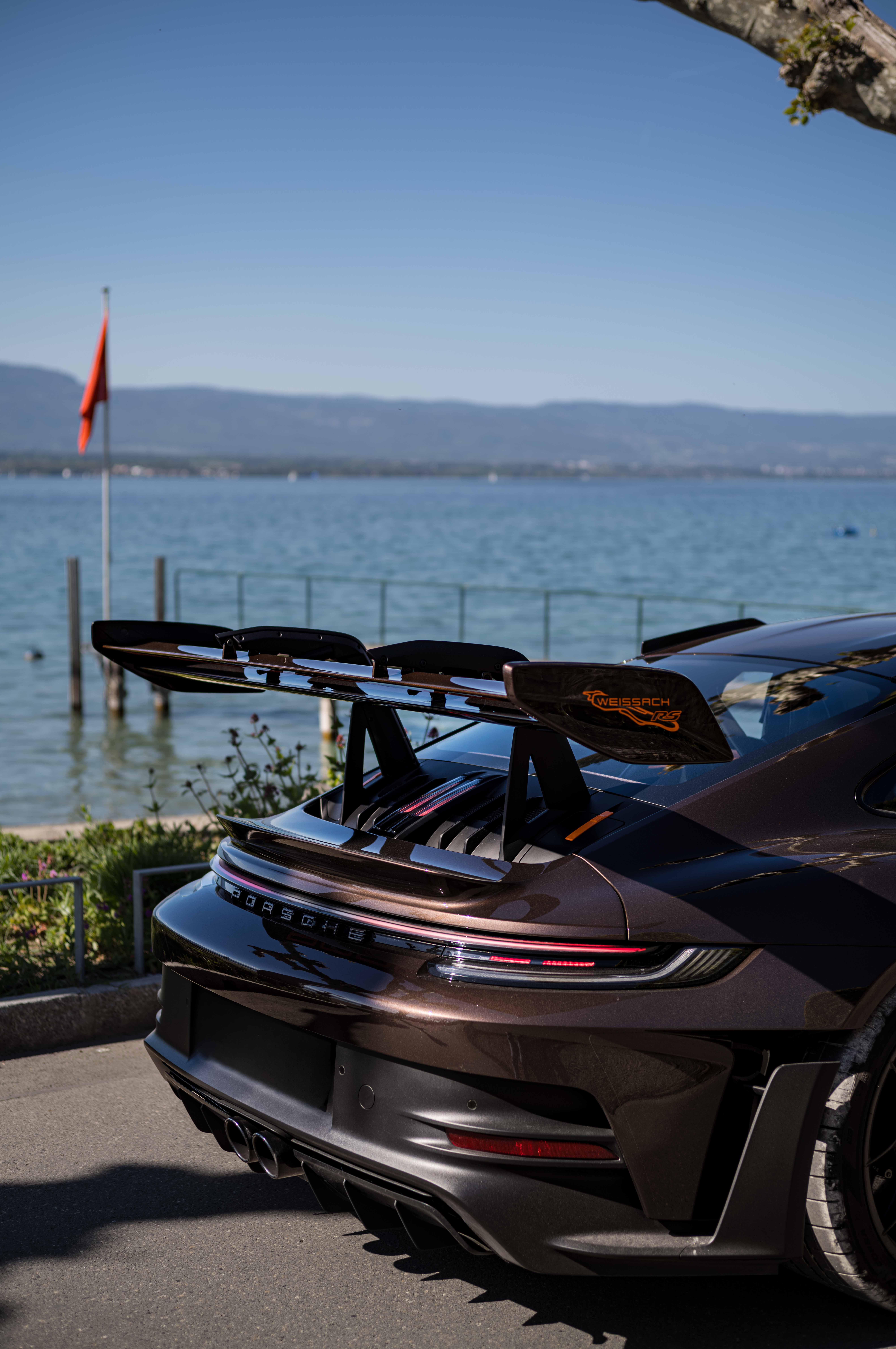
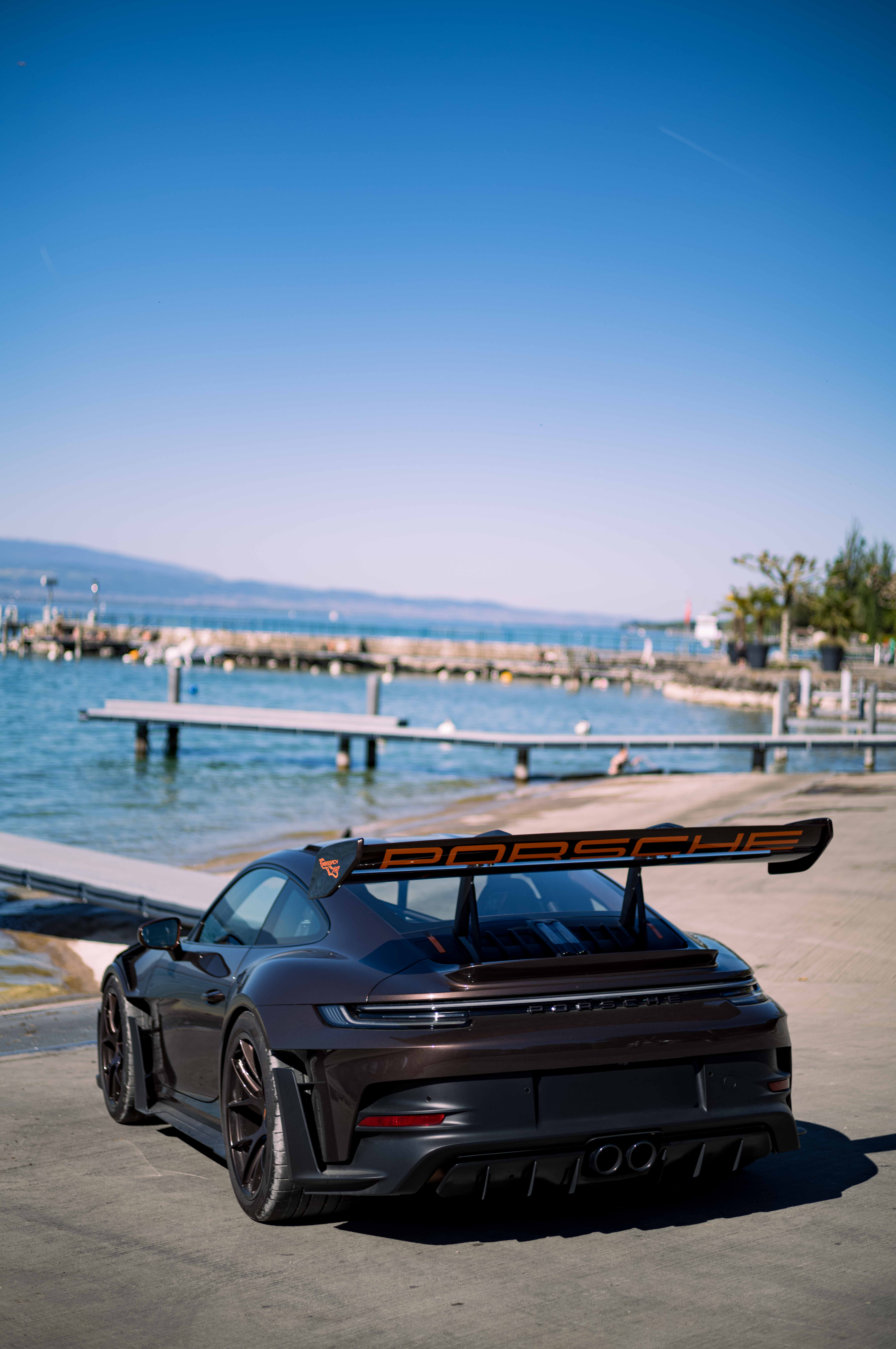
Sonderwunsch, somewhere between brown and not.
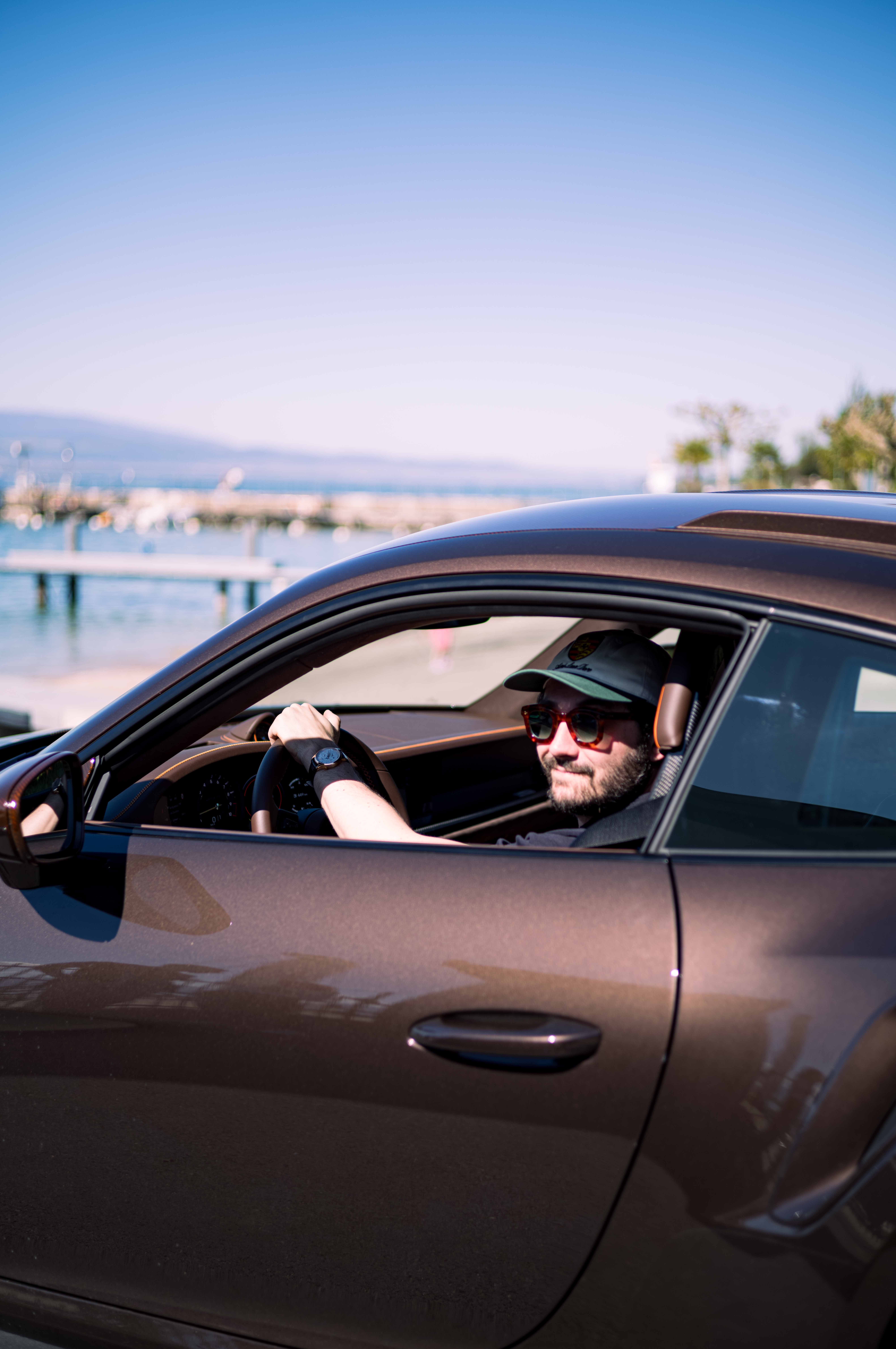
We meet in Corsier-Port around 4pm.
The lake is still bright, the light pretty flat, nothing dramatic yet.
Guillaume is there with the car. He runs the IWC boutique in Geneva, and today he’s the one taking it out. The GT3 RS belongs to a close friend of his who prefers to stay private, so Guillaume makes sure it actually gets driven.
First look, it’s not obvious.
Yes, it’s brown.
But not in a way you immediately understand.
It’s a very impressive thing.
The level of detail, the finish, the way everything has been put together, you can tell time has gone into it.
But on the road, it always feels a bit too much for what you’re actually doing.
You’re not really using it. You’re just scratching the surface. The car clearly belongs on track, where all of this makes sense.
So you end up wondering.
At this price point, does it make more sense to go full track with something like a GT3 Cup, and then have a Touring on the side for the road?
This one sits in the middle.
It looks incredible, it feels special, but you never quite get to the point where you can really use it properly.
It’s a very impressive thing.
The level of detail, the finish, the way everything has been put together, you can tell time has gone into it.
But on the road, it always feels a bit too much for what you’re actually doing.
You’re not really using it. You’re just scratching the surface. The car clearly belongs on track, where all of this makes sense.
So you end up wondering.
At this price point, does it make more sense to go full track with something like a GT3 Cup, and then have a Touring on the side for the road?
This one sits in the middle.
It looks incredible, it feels special, but you never quite get to the point where you can really use it properly.
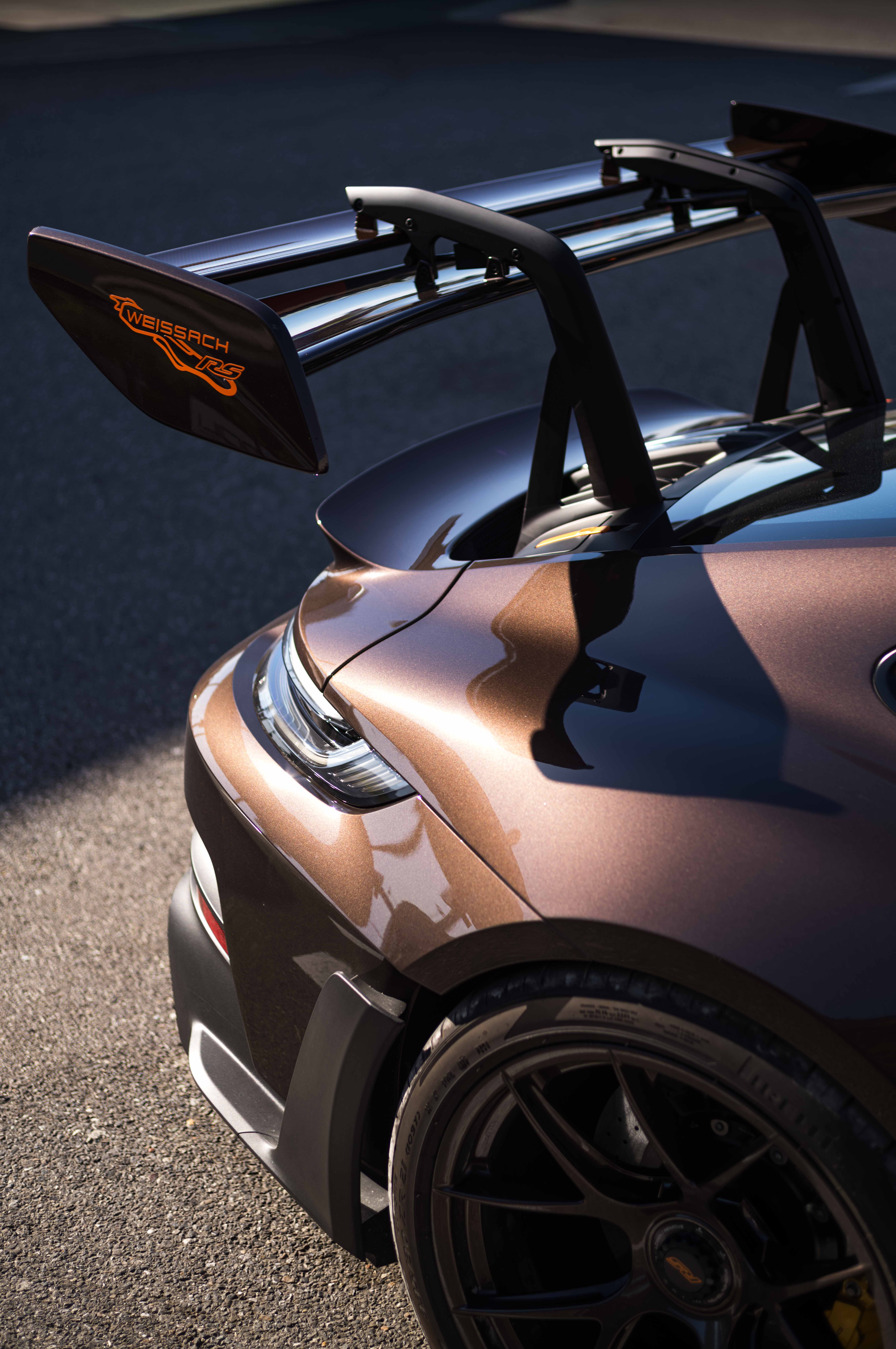
That’s when the color finally makes sense.
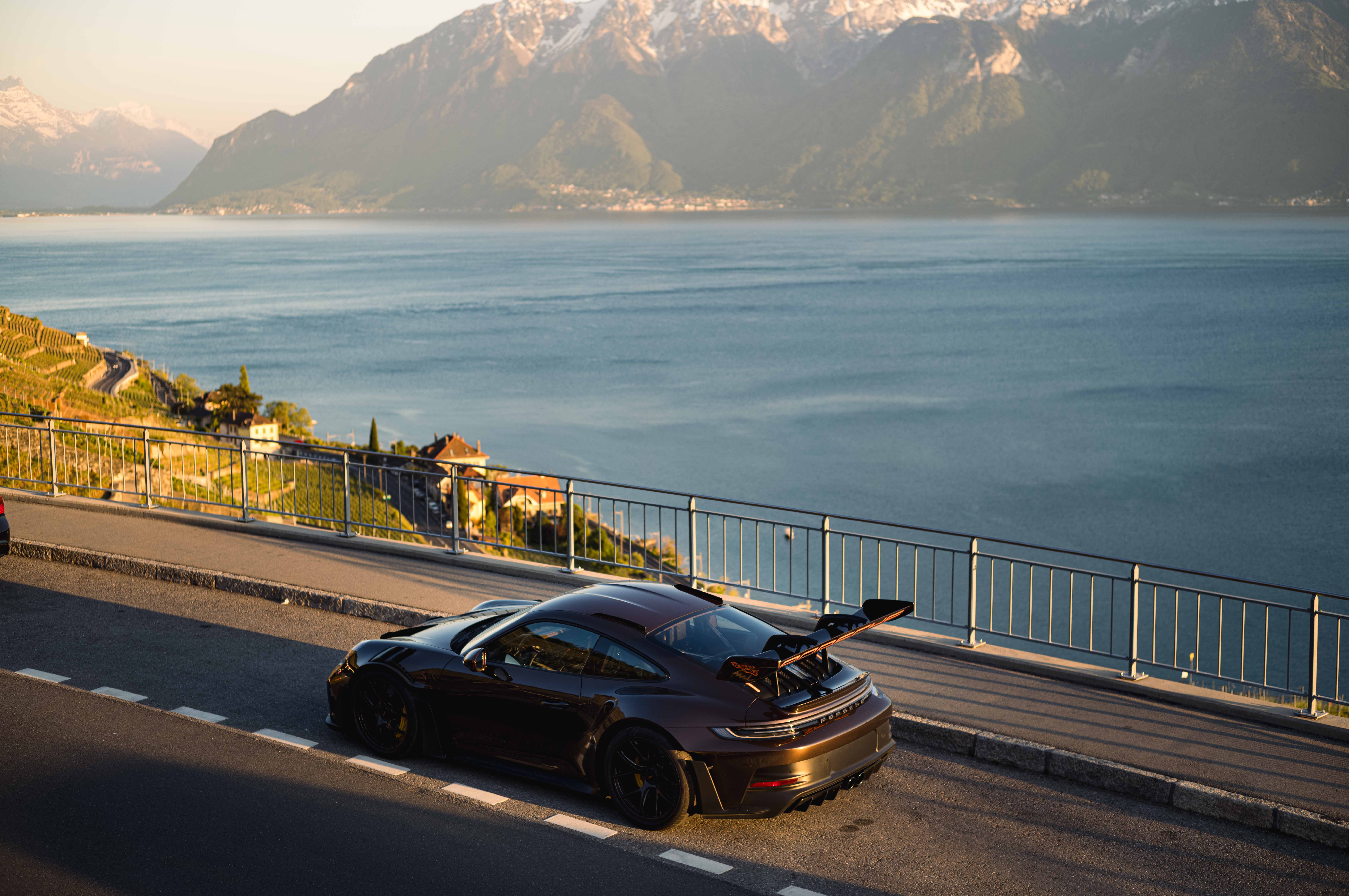
The brown gets richer, almost metallic. The exposed carbon comes through more clearly, especially on the aero parts. The wheels pick up different tones depending on the angle. You keep noticing new things without really trying.
We head down toward Lavaux.
Vineyards, terraces, lake in the background — it’s a quieter atmosphere. The region has been there forever, and it feels like it. Nothing rushed.
The car stops for a bit.
In this light, it looks softer. More depth in the color, less contrast. It fits the place in a different way.
Quick fuel stop after that.
People look, but it takes a second. It’s not immediately obvious what they’re looking at, which is probably why they keep looking.
That’s when the color finally makes sense.
The brown gets richer, almost metallic. The exposed carbon comes through more clearly, especially on the aero parts. The wheels pick up different tones depending on the angle. You keep noticing new things without really trying.
We head down toward Lavaux.
Vineyards, terraces, lake in the background — it’s a quieter atmosphere. The region has been there forever, and it feels like it. Nothing rushed.
The car stops for a bit.
In this light, it looks softer. More depth in the color, less contrast. It fits the place in a different way.
Quick fuel stop after that.
People look, but it takes a second. It’s not immediately obvious what they’re looking at, which is probably why they keep looking.
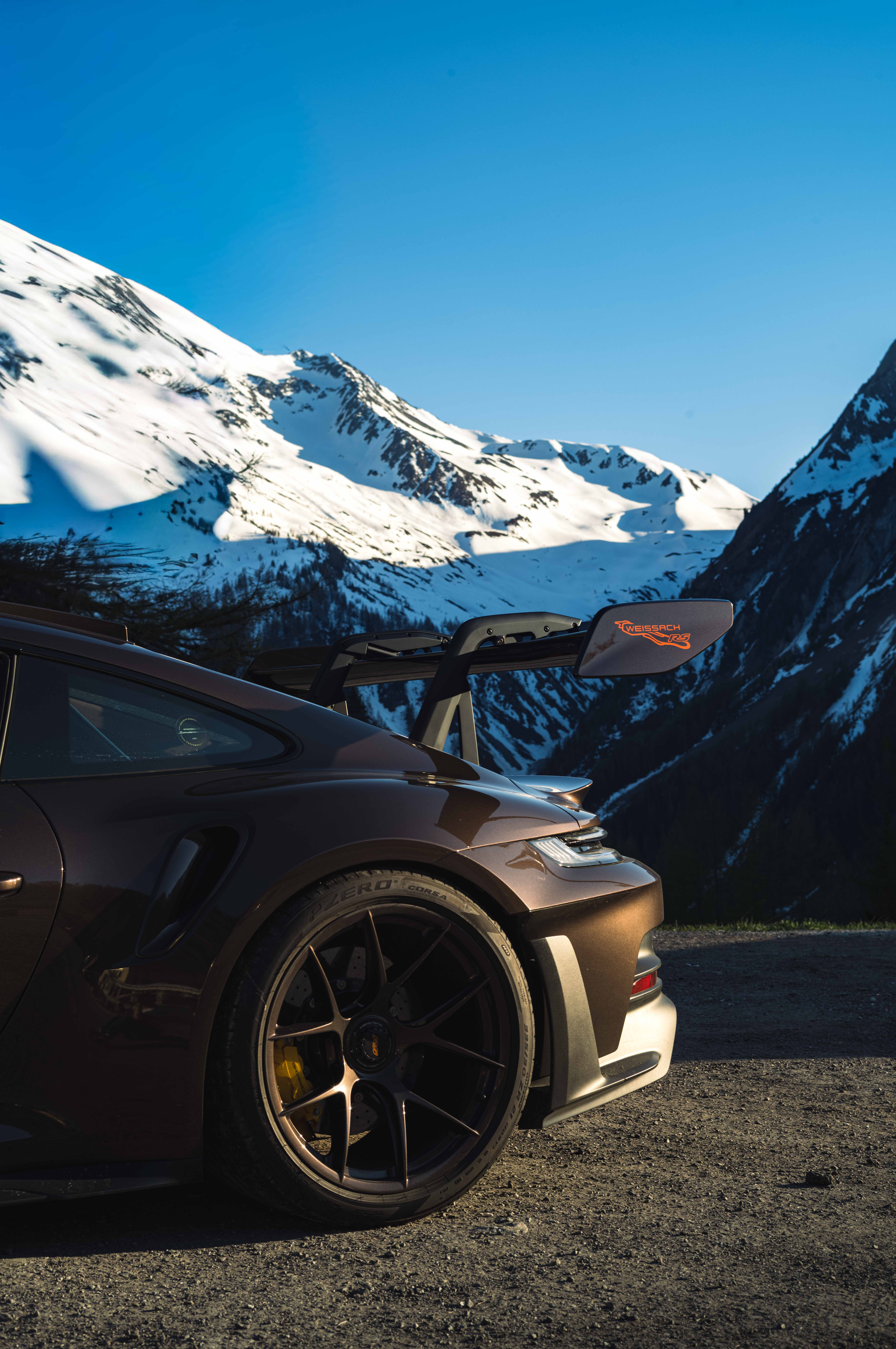
We leave Corsier with the sun still up.
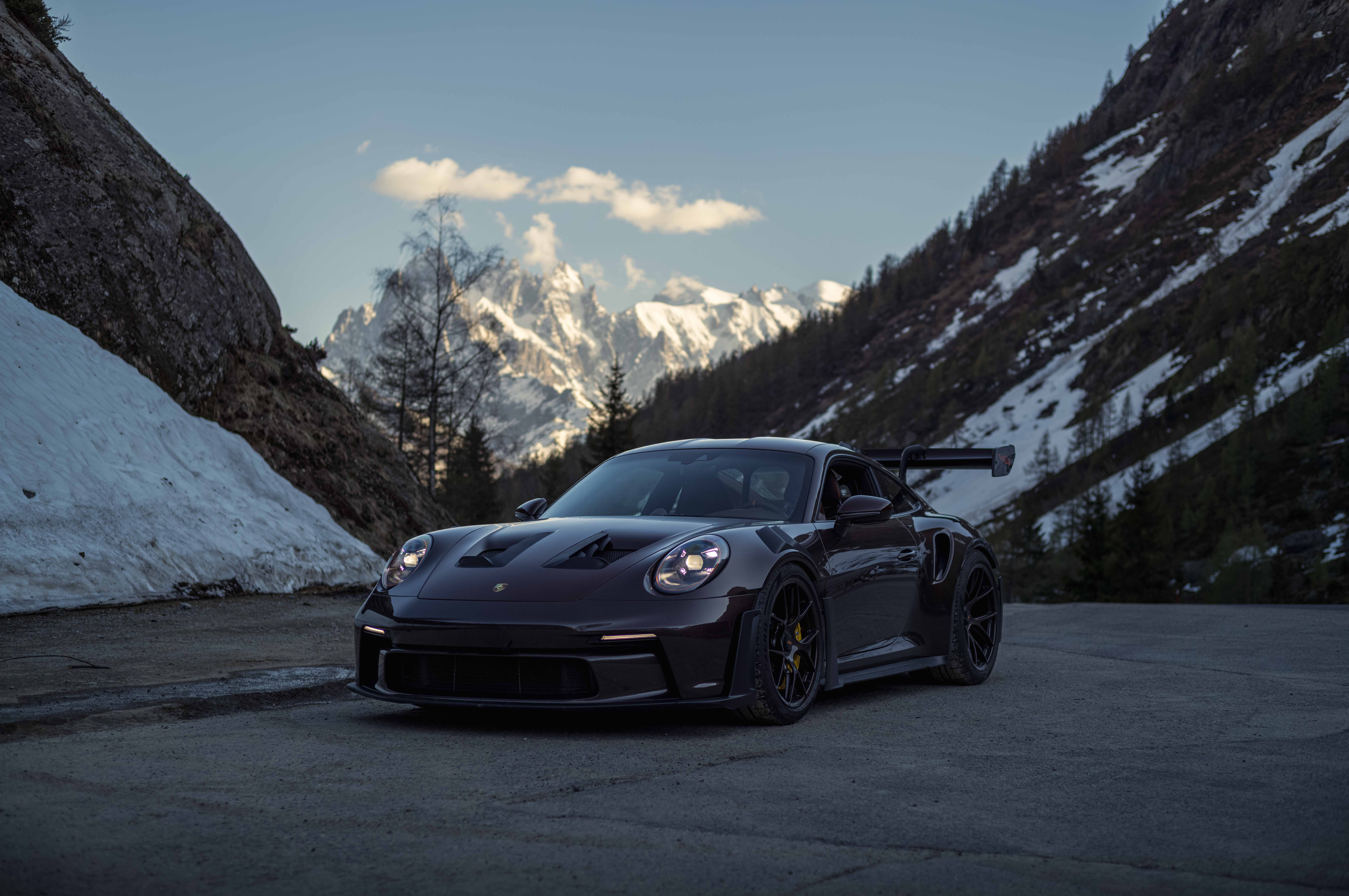
The drive to the Col des Montets (1,461 m) is smooth, open, nothing too technical. The car feels tight straight away. Steering is sharp, brakes are instant, and the whole thing just sits flat.
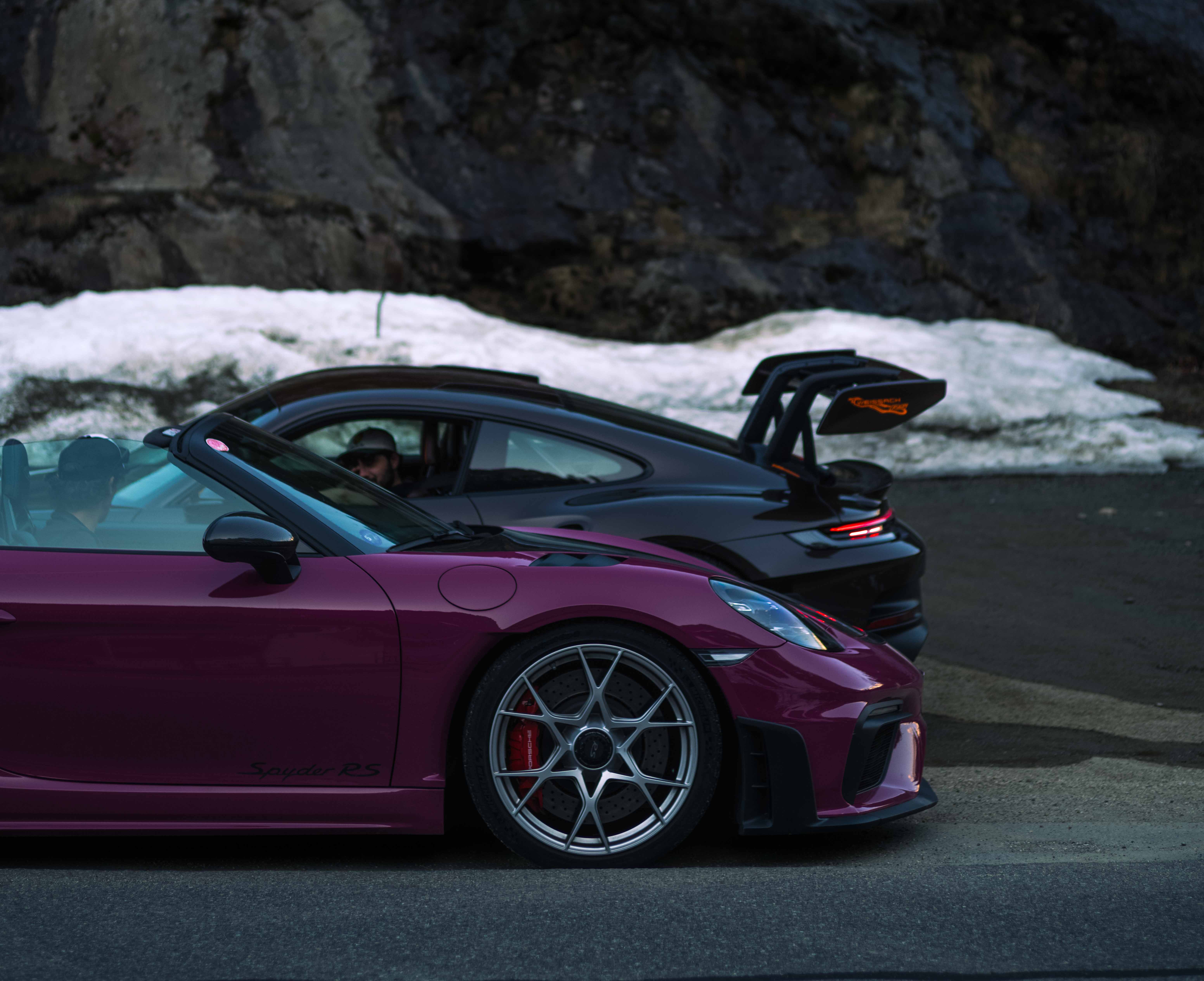
At the top, we meet a 718 Spyder RS in Rubystar.
That one is the opposite in terms of presence. Bright, loud visually, impossible to miss. Next to it, the GT3 RS feels more subtle. Not less special, just less obvious.
We cross over to Switzerland via the Col de la Forclaz (1,527 m).
The road gets narrower here, a bit more interesting. It’s an old link between Chamonix and Martigny, still used all the time, but it keeps that slightly raw feeling.
The car works better here. You feel the front end properly, very direct, and the rear moves just enough to keep things alive. It’s not dramatic, it’s just very precise.
We leave Corsier with the sun still up.
The drive to the Col des Montets (1,461 m) is smooth, open, nothing too technical. The car feels tight straight away. Steering is sharp, brakes are instant, and the whole thing just sits flat.
At the top, we meet a 718 Spyder RS in Rubystar.
That one is the opposite in terms of presence. Bright, loud visually, impossible to miss. Next to it, the GT3 RS feels more subtle. Not less special, just less obvious.
We cross over to Switzerland via the Col de la Forclaz (1,527 m).
The road gets narrower here, a bit more interesting. It’s an old link between Chamonix and Martigny, still used all the time, but it keeps that slightly raw feeling.
The car works better here. You feel the front end properly, very direct, and the rear moves just enough to keep things alive. It’s not dramatic, it’s just very precise.
Up close, it starts to make more sense.
The exposed carbon is tinted,
not the usual dark weave you see on most RS models. Here it blends into the paint, almost brown itself, and depending on the light you either see it clearly or not at all. It’s subtle, but once you notice it, it changes how you read the whole car.
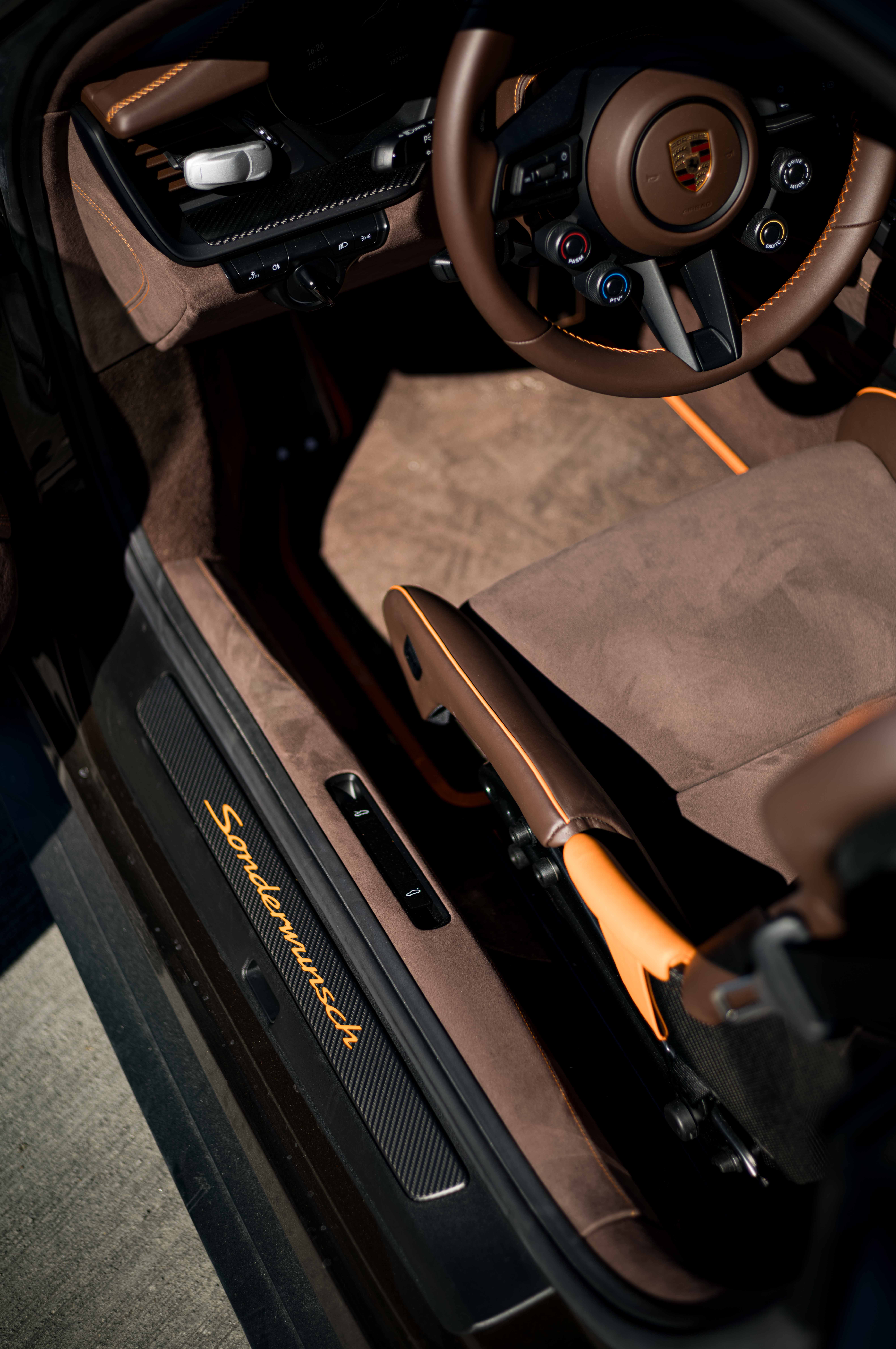
Inside, same approach.
Leather, Alcantara, stitching, everything is properly done, but nothing is shouting. The seats feel solid, the steering wheel is exactly right, and even small details like the air vents or trim pieces are finished to match. It’s consistent more than it is flashy.
Up close, it starts to make more sense.
The exposed carbon is tinted,
not the usual dark weave you see on most RS models. Here it blends into the paint, almost brown itself, and depending on the light you either see it clearly or not at all. It’s subtle, but once you notice it, it changes how you read the whole car.
Inside, same approach.
Leather, Alcantara, stitching, everything is properly done, but nothing is shouting. The seats feel solid, the steering wheel is exactly right, and even small details like the air vents or trim pieces are finished to match. It’s consistent more than it is flashy.
Rs-brownie
Rs-brownie
Sonderwunsch, somewhere between brown and not.
We meet in Corsier-Port around 4pm.
The lake is still bright, the light pretty flat, nothing dramatic yet.
Guillaume is there with the car. He runs the IWC boutique in Geneva, and today he’s the one taking it out. The GT3 RS belongs to a close friend of his who prefers to stay private, so Guillaume makes sure it actually gets driven.
First look, it’s not obvious.
Yes, it’s brown.
But not in a way you immediately understand.
It’s a very impressive thing.
The level of detail, the finish, the way everything has been put together, you can tell time has gone into it.
But on the road, it always feels a bit too much for what you’re actually doing.
You’re not really using it. You’re just scratching the surface. The car clearly belongs on track, where all of this makes sense.
So you end up wondering.
At this price point, does it make more sense to go full track with something like a GT3 Cup, and then have a Touring on the side for the road?
This one sits in the middle.
It looks incredible, it feels special, but you never quite get to the point where you can really use it properly.
It’s a very impressive thing.
The level of detail, the finish, the way everything has been put together, you can tell time has gone into it.
But on the road, it always feels a bit too much for what you’re actually doing.
You’re not really using it. You’re just scratching the surface. The car clearly belongs on track, where all of this makes sense.
So you end up wondering.
At this price point, does it make more sense to go full track with something like a GT3 Cup, and then have a Touring on the side for the road?
This one sits in the middle.
It looks incredible, it feels special, but you never quite get to the point where you can really use it properly.
That’s when the color finally makes sense.
The brown gets richer, almost metallic. The exposed carbon comes through more clearly, especially on the aero parts. The wheels pick up different tones depending on the angle. You keep noticing new things without really trying.
We head down toward Lavaux.
Vineyards, terraces, lake in the background — it’s a quieter atmosphere. The region has been there forever, and it feels like it. Nothing rushed.
The car stops for a bit.
In this light, it looks softer. More depth in the color, less contrast. It fits the place in a different way.
Quick fuel stop after that.
People look, but it takes a second. It’s not immediately obvious what they’re looking at, which is probably why they keep looking.
That’s when the color finally makes sense.
The brown gets richer, almost metallic. The exposed carbon comes through more clearly, especially on the aero parts. The wheels pick up different tones depending on the angle. You keep noticing new things without really trying.
We head down toward Lavaux.
Vineyards, terraces, lake in the background — it’s a quieter atmosphere. The region has been there forever, and it feels like it. Nothing rushed.
The car stops for a bit.
In this light, it looks softer. More depth in the color, less contrast. It fits the place in a different way.
Quick fuel stop after that.
People look, but it takes a second. It’s not immediately obvious what they’re looking at, which is probably why they keep looking.
We leave Corsier with the sun still up.
The drive to the Col des Montets (1,461 m) is smooth, open, nothing too technical. The car feels tight straight away. Steering is sharp, brakes are instant, and the whole thing just sits flat.
At the top, we meet a 718 Spyder RS in Rubystar.
That one is the opposite in terms of presence. Bright, loud visually, impossible to miss. Next to it, the GT3 RS feels more subtle. Not less special, just less obvious.
We cross over to Switzerland via the Col de la Forclaz (1,527 m).
The road gets narrower here, a bit more interesting. It’s an old link between Chamonix and Martigny, still used all the time, but it keeps that slightly raw feeling.
The car works better here. You feel the front end properly, very direct, and the rear moves just enough to keep things alive. It’s not dramatic, it’s just very precise.
We leave Corsier with the sun still up.
The drive to the Col des Montets (1,461 m) is smooth, open, nothing too technical. The car feels tight straight away. Steering is sharp, brakes are instant, and the whole thing just sits flat.
At the top, we meet a 718 Spyder RS in Rubystar.
That one is the opposite in terms of presence. Bright, loud visually, impossible to miss. Next to it, the GT3 RS feels more subtle. Not less special, just less obvious.
We cross over to Switzerland via the Col de la Forclaz (1,527 m).
The road gets narrower here, a bit more interesting. It’s an old link between Chamonix and Martigny, still used all the time, but it keeps that slightly raw feeling.
The car works better here. You feel the front end properly, very direct, and the rear moves just enough to keep things alive. It’s not dramatic, it’s just very precise.
Up close, it starts to make more sense.
The exposed carbon is tinted,
not the usual dark weave you see on most RS models. Here it blends into the paint, almost brown itself, and depending on the light you either see it clearly or not at all. It’s subtle, but once you notice it, it changes how you read the whole car.
Inside, same approach.
Leather, Alcantara, stitching, everything is properly done, but nothing is shouting. The seats feel solid, the steering wheel is exactly right, and even small details like the air vents or trim pieces are finished to match. It’s consistent more than it is flashy.
Up close, it starts to make more sense.
The exposed carbon is tinted,
not the usual dark weave you see on most RS models. Here it blends into the paint, almost brown itself, and depending on the light you either see it clearly or not at all. It’s subtle, but once you notice it, it changes how you read the whole car.
Inside, same approach.
Leather, Alcantara, stitching, everything is properly done, but nothing is shouting. The seats feel solid, the steering wheel is exactly right, and even small details like the air vents or trim pieces are finished to match. It’s consistent more than it is flashy.